
时瑞视角
AI Investment Is a Key Driver of Stock Market Trends
Dr. Hou
|
2026年5月20日
|
10 Minutes
AI investment is becoming an increasingly visible factor in global stock market movements as technology-related sectors expand. Investment activity tied to artificial intelligence infrastructure, computing systems, and digital services continues to influence how markets assess long term growth opportunities.

Summary:
AI investment has become the sole decisive factor driving the current global market. By contrast, the impact of international geopolitical developments, oil prices, macroeconomic factors, data and even Fed policies on the market has weakened significantly.
The reasons: firstly, AI investment has become the only certain growth driver in the market. Secondly, the rapid growth of AI investment is decoupled from macroeconomic trends, and also independent of the monetary policies of global central banks. Thirdly, AI investment today has a highly capital-intensive nature, meaning most gains remain within the corporate and shareholder sectors and are converted into fixed assets. At the same time, only a small portion flows into labor income. Fourth, as a result, semiconductor and related hardware industries are expected to see a substantial surge in profits. Since March, upward revisions to US corporate earnings forecasts have reached record highs, driven primarily by AI-related stocks, particularly semiconductor hardware companies.
The AI driven K-shaped divergence will deepen, with widening gaps in earnings and market capitalization across sectors and individual stocks. Meanwhile, capex pressure drives most cash demand on US tech companies, esp. the leading cloud service giants, which have to tap the global corporate debt market more often to maintain their capex. China’s economy pattern remains as “output stronger than consumption and exports stronger than domestic demand”. Households begin to deleverage, which may still weigh on consumption sector performances.
Even if oil prices ease slightly in the short term, previous supply disruptions and inventory drawdowns will keep oil prices elevated for an extended period ahead, thereby continuing to weigh on global consumption. Stocks closely linked to global retail consumption will continue to suffer from weak demand and elevated energy costs. Meanwhile, global investable capital will likely continue to gear toward AI hardware related stocks with clear growth prospects, further intensifying the market’s K-shaped divergence.
In the US, A-share and Hong Kong stock markets may maintain K-shaped divergence in the near term. For instance, the Nasdaq will outperform the Dow Jones, while the ChiNext Index will outperform the Shanghai Composite Index. Nevertheless, after the sharp rally over the past month, major market indices are expected to see a slower pace of gains following the pricing-in of positive sentiment from the US-Iran ceasefire.
With market focus rotating back toward AI investment, base metals will have better upside potential than the previously strong energy and chemical sectors. Gold and silver are also set to stage a moderate rebound.
Previous Views:
We expect oil prices to remain exposed to upside risks, which could further drive up the prices of downstream chemical products. However, oil shortages and higher oil prices will also weigh on the global economy and downstream demand. Therefore, once shipping traffic in the strait resumes, prices of these commodities are likely to correct notably, and investors should be cautious toward speculative trading in them. We maintain a cautious stance on the stock market in the short term. However, if major indices pull back by more than 5%, investors may consider gradual position-building.
Views in May:
I. AI Investment Has Become the Sole Variable Determining Stock Market Trends Now
Since the outbreak of the US-Iran war in March, geopolitical tensions have deteriorated. Disruptions to supplies through the Strait of Hormuz have triggered a sharp surge in oil prices, posing major risks to the global economy this year. Nevertheless, after a pullback in March, global stock markets staged a sustained rebound starting in April, with major stock indices in the US, South Korea, and other markets hitting record highs. A fundamental shift has taken place in stock market dynamics before and after the outbreak of the war. Before the conflict, global stock market hotspots were relatively diversified, whereas the current round of global equity rebounds has become highly concentrated on AI capex-related themes. The performance of stock markets and individual stocks since April 2026 has been entirely determined by their connection with AI capex, and especially the related hardware demand.
For instance, the Philadelphia Semiconductor Index in the US skyrocketed from 7,084 points to 12,000 points in just 30 trading days from early April to the present, representing a gain of more than 60%. The stock markets of Taiwan and South Korea have led global gains since the start of this year, solely because of the heavy weighting of semiconductor stocks in their markets. Similarly, semiconductor and optical module stocks have led the rally in the A-share market. Since global stock markets resumed their upward momentum in April, semiconductors and other hardware manufacturers benefiting from AI capex have become the sole decisive factor driving the current global market. In contrast, the impact of international geopolitical developments, oil prices, macroeconomic data, and even Fed policies on the market have weakened markedly.
We believe the above phenomenon can be attributed to the following reasons. First, against the backdrop of highly uncertain global geopolitics and economic trends, AI investment has emerged as the market’s only clear and reliable growth driver. In other words, the certainty of AI-driven growth stands as its greatest scarcity premium amid an uncertain global economic environment. As a result, capital from all countries and other sectors worldwide has increasingly flowed into AI-related industries, either through secondary market stock purchases or PE/VC investments. This has created a powerful capital siphon effect for AI investments, triggering an explosive surge in valuations across relevant industries and individual stocks.
Second, at this stage, the rapid growth of AI investment is decoupled from macroeconomic trends and independent of the monetary policies of global central banks. This is because AI has evolved into a core development direction that major global tech giants are competing fiercely for and collectively betting on, ensuring that AI investment will maintain robust growth for the foreseeable future. This also means AI investment is essentially disconnected from current global macroeconomic performance.
As a result, their AI capital expenditure is completely insulated from fluctuations in the macroeconomy or international geopolitical situations. Meanwhile, these tech giants boast abundant capital strength and strong financing capacity, enabling them to sustain and ramp up heavy capital spending on AI over the next year, regardless of Fed rate moves, hikes or cuts. From this perspective, uncertain events such as the US-Iran conflict and the leadership change at the Fed may weigh on other global sectors, especially cyclical consumption. Therefore, they further highlight the scarcity of AI’s guaranteed growth this year, boosting its appeal to global capital.
Third, AI investment today is highly capital-intensive nature. Compared with the dot.com bubble three decades ago, the capitalization ratio of the current AI investment wave is markedly higher. While both periods drove hardware investment, the Internet era mainly fueled demand for network telecom equipment and computer hardware, with an overall scale far smaller than the current AI-driven demand for computing power, high-speed storage, data centers and even power infrastructure construction. In addition, the rise of the Internet bubble generated massive demand for software and talent, leading to a far larger share of investment flowing to labor compensation than is the case today. In contrast, today’s AI investment creates far fewer new job opportunities, while increasingly replacing service-sector roles.
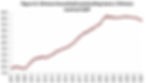
The advantage of this model is that for the same scale of investment, a higher capitalization ratio better supports profit expansion and stock price gains for AI-related manufacturers along the industrial chain. The downside is that aggregate labor income does not rise, which may further suppress overall consumption. As shown in the left chart of Figure 1, overall US economic growth has slowed noticeably over the past six months. Yet, AI investment growth and its contribution to US GDP have continued to rise, while the contribution of personal goods consumption to GDP growth has fallen to zero. This contrasts sharply with the late 1990s Internet boom, when a larger share of new investment went to labor income, substantially lifting household earnings and driving rapid consumption growth. As shown in the right chart of Figure 1: during the Internet boom, U.S. GDP growth and personal consumption remained strong. After the bubble burst in 2000, personal income growth slowed, dragging down both economic expansion and consumption momentum.


Fourth, the factors outlined in the third point explain why the late-1990s Internet boom significantly boosted household income and employment in the US, which, in turn, drove consumption growth. However, profits of internet businesses have failed to improve, leaving shareholders with little earnings returns and ultimately pricking the stock market bubble. In contrast, the current wave of AI investment flows largely into capital goods, energy, and other related sectors. In essence, most investment gains remain within the corporate/shareholder sector or are converted into fixed assets, with only a minimal share going toward labor income. This capital allocation model closely resembles China’s large-scale infrastructure and real estate investment cycle during the 2010s. The outcomes are also comparable: investment concentrates in capital goods sectors — represented by chips, memory, and optical modules in this AI cycle, and previously by non-ferrous metals, coal, and heavy machinery during China’s infrastructure boom. These sectors experience rapid revenue growth, while downstream household consumption growth remains relatively weak.
From a profit perspective, the current AI hardware closely resembles China’s past cyclical sectors. Its sustainability depends entirely on the ability of core investors to secure continuous financing and scale up capex. In the AI sector, this refers to leading large cloud service providers such as Google, Microsoft, and Amazon, which are analogous to China’s past infrastructure investment entities including local governments and property developers. As long as the capital chains of these key investors remain intact and they continue ramping up capex and expansion, the stock rally in the hardware cyclical sectors can persist. Conversely, once the market perceives a slowdown in capex growth among major investors, stock prices in these cyclical industries will start to decline even if current earnings remain strong. At present, the market is in a peak phase of aggressive upward revisions to earnings forecasts for AI-related stocks. Starting in March, following the release of Q1 earnings results, the upward revisions to US equity forward earnings for 2026 have hit a record high (Figure 2). Total earnings of S&P 500 companies were $2.28 trillion in 2025. The market’s consensus earnings forecast for 2026 has now been revised up to $3 trillion. That means if realized, S&P 500 earnings would surge by more than 30% in 2026, outpacing the cumulative earnings growth recorded over the past four-year period from 2022 to 2025. The total market capitalization of the S&P 500 currently stands at $65.6 trillion, implying a forward price-to-earning ratio of around 22 times.

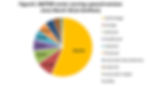
In terms of earnings revision magnitude across sectors (Figure 3), the technology sector stands out. Of the total $620 billion upward revision to the S&P 500’s one-year forward earnings expectations, the technology sector contributed $350 billion alone. The recent sharp rally in oil prices is mainly driving the second-ranked energy sector’s earnings revisions. Meanwhile, consumer discretionary and consumer staple stocks rank at the bottom. This also reflects that market analysts do not believe AI investment can drive a recovery in consumption.
II. AI Drives Accelerating K-Shaped Divergence and Surging Corporate Financing Demand
The recent performance in global equity markets reflects this accelerating K-shaped divergence. Google and Meta largely drove gains in the telecommunications sector, while the consumer discretionary index was led mainly by Amazon. We calculate that the S&P 500 has added a total of $7.4 trillion in market value since its March 30 trough, and the leading tech giants and semiconductor-related stocks alone account for over $6 trillion of that incremental market cap.

Beyond the K-shaped divergence in the stock market, global investment capital is increasingly flowing toward AI-related companies. At the same time, mounting capex pressure is forcing major technology companies to scale up financing efforts. In addition, listed large tech giants — especially major cloud service providers, facing massive capital spending, mainly the five US firms Google, Microsoft, Amazon, Meta, and Oracle — have continuously ramped up corporate bond issuance to raise funds.
According to the latest Q1 earnings reports from these five leading U.S. cloud providers, their combined capex reached $188.7 billion, surpassing their aggregate operating cash inflows of $150.7 billion for the same period. This has instead weakened their cash flow positions, forcing them to expand debt financing to secure additional funding.

Therefore, since Q4 last year, the five major US AI cloud service providers have rapidly expanded their debt financing. Over the past six months, all five companies have issued substantial amounts of corporate debt, with quarterly net bond issuance proceeds approaching $90 billion. Moreover, to diversify corporate debt market supply pressure, several of these companies have not only issued US dollar-denominated debt, but also raised debt in euros, pounds sterling, and Swiss francs in Europe.

From another perspective, the ability of these companies to continue issuing debt at such a scale indicates that AI-related capex is likely to keep expanding over the next one to two quarters. This forms the fundamental rationale behind the continuous upward earnings revisions for AI hardware firms. Nevertheless, given the current scale of financing, few companies outside this core group possess the capacity to secure such massive incremental funding on a sustained basis for AI capex. In other words, the pace of overall AI capital spending is largely determined by the investment tempo of these leading firms, and the marginal increase in their investment scale hinges heavily on the scale of their financing expansion.
III. China’s Economy Maintains the Pattern That Output Is Stronger Than Consumption and Export Is Stronger Than Domestic Demand
Judging from China’s released Q1 economic data, the domestic economy has continued to maintain the overall pattern of stronger output than consumption, and stronger external demand than domestic demand. Specifically, China’s Value- Added Industry (VAI) grew by 6.1% YoY in Q1, while total retail sales of consumer goods rose by merely 2.4% YoY, less than half the growth rate of VAI. As output continues to outpace domestic consumption growth, overall economic growth and the balance between supply and demand remain highly reliant on exports. China’s exports surged 14.7% YoY in Q1, marking a further acceleration from last year. Major industries show a similar trend. Take the passenger vehicle industry as an example: a total of 5.93 million passenger vehicles were sold in Q1, representing a 7.55% YoY decline. Breaking this down further, domestic passenger vehicle sales were 3.97 million units in Q1, a YoY decline of 22.3%; while exports hit 1.96 million units, a 50% increase from 1.30 million units in Q1 last year. Consequently, passenger vehicle exports accounted for 33% of total sales in Q1, meaning one out of every three passenger vehicles manufactured in China is exported. By comparison, exports accounted for only 25% of total sales last year.

Apart from sluggish household income growth and the drag from reduced consumption subsidies, another key factor weighing on domestic consumption growth is the ongoing trend of household deleveraging in China. At the end of March this year, China’s outstanding household loans stood at RMB 82.7 trillion, down from RMB 83 trillion recorded at the end of March 2025. This marks the first YoY net decline in China’s household loan balance over the past two decades. It indicates that the household sector has shifted from stopping leveraging up to actively deleveraging. Over the past few years, the central bank and financial regulators have rolled out a series of measures, including repeatedly cutting interest rates, easing loan approval requirements, lowering the minimum down payment for mortgages, and even exempting minor consumer loan defaults.
From the perspective of stock market investment, if Chinese households remain in a deleveraging cycle, domestic consumption-related stocks are unlikely to experience a genuine and sustained rally.
IV. Market Strategy
Even if oil prices ease slightly in the short term, previous supply disruptions and inventory draw downs will keep the oil prices elevated for an extended period ahead, thereby continuing to weigh on global consumption. Against this backdrop, stocks closely linked to global retail consumption will continue to suffer from weak demand and elevated energy costs. Global investable capital will continue to converge toward AI hardware-related stocks with clear growth prospects, further intensifying the market’s K-shaped divergence. Market indices with high weightings in semiconductors and tech hardware — such as the Nasdaq, South Korean and Taiwan markets, as well as China’s Chi Next Index — are likely to keep advancing.
The US, A-share, and Hong Kong stock markets are also likely to maintain a K-shaped divergence in the near term. For instance, the Nasdaq will outperform the Dow Jones, while the ChiNext Index will outperform the Shanghai Composite Index. Nevertheless, after the sharp rally over the past month, major market indices are expected to see a slower pace of gains as positive sentiment from the US-Iran ceasefire.
As market focus rotates back toward AI investment, base metals may have stronger upside potential than the previously strong energy and chemical sectors. Meanwhile, gold and silver are also expected to stage a moderate rebound.

Dr. Hou
Dr. Hou holds an MBA from Wisconsin School of Business at the University of Wisconsin-Madison and has a rich history of leading strategy teams. At China International Capital Corporation, he was instrumental in guiding both the overseas and A-share strategy teams, earning several top honors in strategy research. Later, he significantly contributed to macro strategy research at Shanghai Discovering Investment, where he played a pivotal role in achieving exceptional market returns. His expertise is particulary recognized in financial strategy and market analysis within the chinese market.
时瑞金融集团内容团队。
免责声明: 本文件仅供参考之用。本文件在任何情况下均不应被解释为购买或出售的要约或招揽,也不构成与任何资本市场产品相关的财务建议或推荐。本文件所载的所有信息均基于公开信息,并且来自时瑞金融认为在发布本文件时可靠且正确的来源。
对于因任何遗漏、错误、不准确、不完整或其他原因,或因依赖此类信息而遭受的任何损失或损害(无论是直接、间接或间接损失或任何其他形式的经济损失),时瑞金融概不承担责任。期货合约、衍生品合约和商品的过往表现或历史记录并不代表未来表现。本文件中的信息如有更改,恕不另行通知。
另请参阅我们在 https://www.straitsfinancial.com/important-notices-and-disclaimer 上的重要声明。
首席经济学家评论
探索更多评论
及时了解我们首席经济学家对重要经济趋势和市场动态的每月见解。

时瑞视角
Pressures in Overseas Bond Markets May Keep Mounting
2026年9月17日
|
15 Minutes
The changing relationship between US financing needs and international capital flows. Foreign investment in US financial assets has grown substantially, with increasing allocations to equities and corporate bonds, while China is adjusting its overseas investment strategy and reducing reliance on US financial assets.

