
Latest:
Protect Yourself from Scams and Fraud
COMMODITIES, INVESTMENT STRATEGY
Natural Gas Seasonality: Why Prices Swing Every Year
August 4, 2026
|
8 Minutes
Natural gas seasonality reflects how predictable changes in energy demand, production, and storage influence market conditions across the year. By examining seasonal cycles, market participants can better understand the factors that shape natural gas pricing and supply demand dynamics.
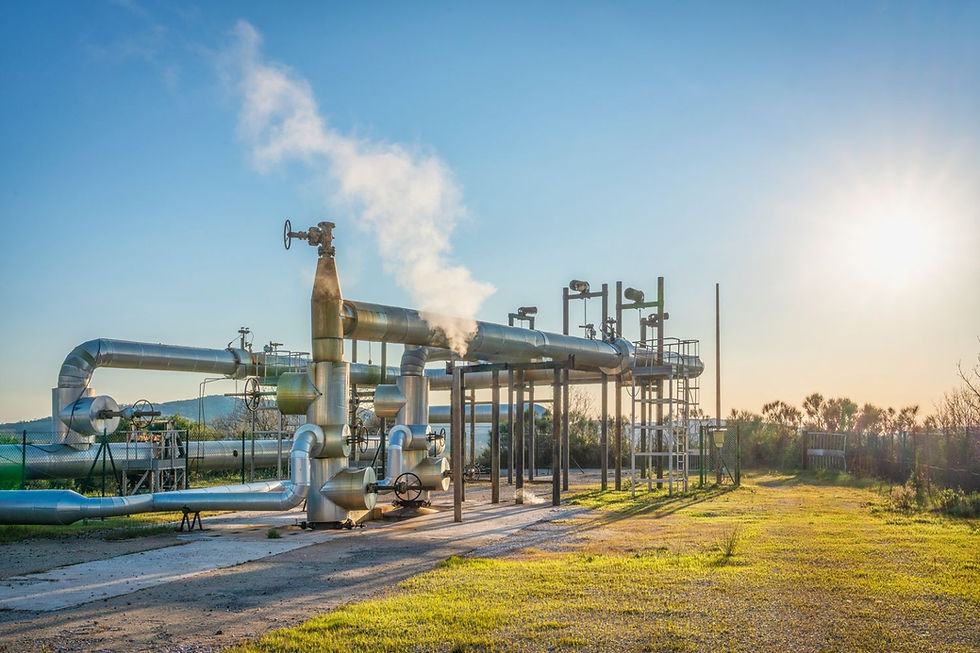
If you trade, hedge, or manage exposure to natural gas, you already know the basics; prices tend to climb in winter and pick up again in summer. What's harder to judge in the moment is how much of a given move is normal seasonal behaviour and how much is something genuinely new. Natural gas seasonality is one of the most reliable patterns in the commodities market, but reliable doesn't mean predictable in magnitude or timing, and that gap is exactly where trading and hedging decisions get made.
Unlike many commodities that primarily respond to industrial demand or economic growth, natural gas consumption changes throughout the year because it is closely linked to weather. Heating demand during winter and electricity demand during summer create recurring periods of stronger consumption, making natural gas more seasonal than most other traded commodities.
Why Natural Gas Shows More Pronounced Seasonality Than Most Commodities
Among energy commodities, natural gas stands out because demand is directly affected by temperature.
During the winter months, millions of homes and businesses rely on natural gas for space heating. As temperatures fall, consumption rises significantly, causing inventories to decline and increasing competition for supply. Even a colder than expected winter can tighten the market and push prices higher.
Summer plays an equally important role. As temperatures rise, air conditioning use climbs, and because gas-fired plants generate a large share of the world's electricity, that cooling demand feeds straight back into gas consumption.
In contrast, spring and autumn are generally considered "shoulder seasons." During these periods, heating and cooling demand are relatively low, allowing producers and storage operators to replenish inventories before the next period of peak demand.
That rhythm of building through the shoulder seasons, drawing down through winter, and spiking again in summer is more pronounced in natural gas than in almost any other actively traded commodity.
For example, metals such as copper are primarily influenced by industrial production and infrastructure spending. Agricultural commodities depend on planting and harvest cycles. Meanwhile, crude oil demand is supported by transportation, manufacturing, and broader economic activity throughout the year. Natural gas, however, experiences substantial shifts in consumption simply because temperatures change.
As a result, weather becomes one of the market's most influential drivers, making natural gas prices especially sensitive to seasonal expectations.
Read also: Inflation Precious Metals: How Gold, Silver, Copper React
What Natural Gas Seasonality Means for Traders and Hedgers
For traders and hedgers, seasonal demand isn't just background context, it shows up directly in position sizing, hedge timing, and risk budgeting.
For traders, seasonality provides context for anticipating periods when price volatility is likely to increase. Markets often become more active before winter begins as participants position themselves for potential heating demand. Likewise, forecasts of hotter summers can increase expectations for electricity generation, creating additional trading opportunities.
However, seasonality should not be interpreted as a guarantee that prices will always move in the same direction. Market conditions can differ significantly from one year to the next depending on storage levels, production growth, infrastructure capacity, liquefied natural gas (LNG) exports, and overall supply-demand balances.
Instead, seasonal trends serve as a framework for understanding commodities when market sensitivity is likely to be highest.
For companies exposed to natural gas prices, seasonality also plays a key role in hedging decisions.
Utilities may seek to manage procurement costs ahead of winter demand. Manufacturers that rely on natural gas as an energy source may hedge against rising prices to improve budgeting certainty. Producers, on the other hand, may use derivatives to help manage the risk of declining prices during periods of weaker seasonal demand.
Rather than attempting to predict exact price movements, many commercial participants use seasonal analysis to better determine when price risk may increase and when hedging strategies should be reviewed.
How Short Term Weather Forecasts Move Prices
Although seasonal demand follows a recurring annual pattern, day-to-day price movements are often driven by short-term weather forecasts.
Natural gas markets closely monitor changes in temperature expectations because even small forecast revisions can significantly alter projected demand.
For example, if weather models suddenly predict a colder than normal winter over major consuming regions, traders may anticipate higher heating demand and reduced storage inventories. This can quickly increase buying activity and push prices higher.
Conversely, forecasts showing milder winter temperatures may reduce expected consumption, leading to downward pressure on prices.
The same principle applies during summer. Extended heatwaves often increase electricity demand as households and businesses use more air conditioning. Since many power plants rely on natural gas, hotter weather can result in stronger gas consumption and higher prices.
This dynamic is playing out right now. According to NOAA, climate prediction center moved from a La Nina winter last year to an El Nino Advisory in June 2026, with roughly 96 to 98% odds that El Nino persists through the 2026-27 winter. El Nino winters tend to run milder across much of the northern U.S., the opposite of last year's La Nina signal, and that's exactly the kind of forecast shift that can move the futures curve well before the first cold snap arrives.
What makes natural gas particularly unique is the speed at which the market reacts.
Weather forecasting models are updated several times each day, meaning market expectations can change rapidly. Prices often move immediately after new forecast data is released, long before actual weather conditions occur.
Professional market participants typically monitor several indicators alongside weather forecasts, including:
Heating Degree Days (HDD)
Cooling Degree Days (CDD)
Weekly natural gas storage reports (most notably by the EIA Weekly Natural Gas Storage Report)
Production and pipeline flows
LNG export activity
Regional weather model updates (including NOAA Climate Prediction Center outlooks)
Together, these indicators help traders evaluate whether expected demand will exceed or fall below current supply conditions.
Managing Natural Gas Exposure in a Seasonal Market
No single indicator tells the whole story. Seasonality explains the recurring pattern; storage levels, weather forecasts, and supply fundamentals explain why this year might break from it.
For traders, combining seasonal analysis with technical and fundamental research can provide a more balanced market view.
For businesses using natural gas, regularly reviewing exposure and implementing appropriate hedging strategies before periods of heightened seasonal demand may help reduce uncertainty caused by price volatility.
While no market pattern guarantees future performance, understanding natural gas seasonality enables participants to better interpret market movements and prepare for changing conditions throughout the year.
Read also: What Investors Should Know About Oil vs Natural Gas
Conclusion
Natural gas seasonality is one of the defining characteristics of the global energy market. Unlike most commodities, natural gas demand is closely linked to weather, creating predictable periods of stronger consumption during winter heating seasons and summer electricity demand.
This seasonality influences trading activity, hedging decisions, and overall market volatility. At the same time, short-term weather forecasts can rapidly reshape price expectations, often triggering immediate market reactions before temperatures change.
For institutional traders and hedgers, that means treating seasonality as a starting point rather than a forecast: one input alongside real time storage data, weather forecasts, and supply fundamentals. Straits Financial's commercial hedging and trade execution teams work with clients on exactly this kind of seasonal positioning across global energy and commodity markets. Get in touch to talk through your natural gas exposure ahead of the next demand season.

Written and edited by the Straits Financial Group Content Team
DISCLAIMER: This document is issued for information purposes only. This document is not intended, and should not under any circumstances to be construed as an offer or solicitation to buy or sell, nor financial advice or recommendation in relation to any capital market product. All the information contained herein is based on publicly available information and has been obtained from sources that Straits Financial believes to be reliable and correct at the time of publishing this document.
Straits Financial will not be liable for any loss or damage of any kind (whether direct, indirect or consequential losses or other economic loss of any kind) suffered due to any omission, error, inaccuracy, incompleteness, or otherwise, any reliance on such information. Past performance or historical record of futures contracts, derivatives contracts, and commodities is not indicative of the future performance. The information in this document is subject to change without notice.
Please also refer to our important notices at https://www.straitsfinancial.com/important-notices-and-disclaimer.
Insights
Explore More Insights
Discover additional market analysis and expert perspectives from Straits Financial Group.

RISK MANAGEMENT, INVESTMENT STRATEGY
Correlation vs Causation in Investing: Market Risk
October 16, 2026
|
7 Minutes
Financial markets often show relationships between asset prices, economic indicators, interest rates, and investor behavior. However, observing two variables move together does not necessarily mean one causes the other. Distinguishing statistical relationships from causal mechanisms is important when evaluating market trends and the assumptions behind investment strategies.

ASSET MANAGEMENT, INVESTMENT STRATEGY, MARKET PERFORMANCE
Behavioral Risk Trading: Trading Discipline Audit
October 15, 2026
|
7 Minutes
Trading discipline depends on maintaining a consistent decision making process despite uncertainty and emotional pressure. When traders react impulsively to market movements or recent outcomes, psychological biases can influence their actions and lead them away from their intended trading rules.

INVESTMENT STRATEGY, ASSET MANAGEMENT, RISK MANAGEMENT
Investment Styles Across Generations: From Gen Z to Boomers
October 9, 2026
|
7 Minutes
Generational investment behavior examines how investors’ financial goals and circumstances relate to their approach to managing money. Retirement needs, wealth accumulation, liquidity requirements, and comfort with investment risk can influence decisions across different age groups.